iTop VPN offers 3200+ VPN servers in 100+ locations worldwide to help you access various sites privately and safely, along with dedicated IP, dynamic and static IP, and Double VPN.
Check the best VPN for Rust to reduce lag, access global servers, and improve gameplay. Learn how Rust VPN works and find the best free VPN for Rust options.
Every Rust player knows how critical your connection is. Even a slight delay can mean losing loot, missing shots, or getting eliminated in intense fights. That’s why more players are searching for the best VPN for Rust, exploring how a Rust VPN can stabilize connections and reduce lag spikes.
Then, is a VPN for Rust can really unlock better servers or improve performance across regions? While VPNs are often misunderstood, they can play a valuable role in optimizing gameplay - when used correctly. In this guide, we’ll break down everything you need to know and share the top Rust VPN options.
Before diving deeper, let’s have a clear understanding of the basics of the game.
Rust is a multiplayer survival game where players gather resources, build bases, and fight others in real time. The competitive nature of the game makes performance and fairness extremely important. “Rust cheating” refers to using unfair tools like aimbots, ESP, or scripts to gain an advantage. These actions violate the game’s rules and often lead to bans.
While some players search for shortcuts, most are simply trying to improve their experience legitimately - this is where tools like the best VPN for Rust come into play.
Many users search for terms like “best VPN for Rust cheating,” but their intentions are often misunderstood.
Some players believe a VPN can hide their identity or bypass bans. However, VPNs are not designed for cheating. A Rust VPN primarily changes your IP address and routes your connection through different servers; it does not modify gameplay or bypass anti-cheat systems.
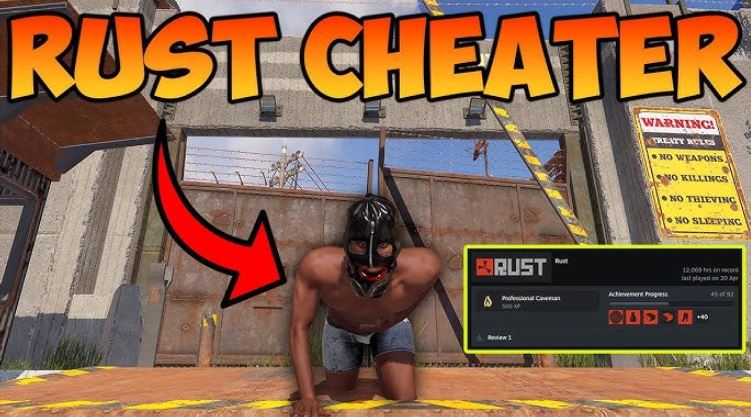
Cheating in Rust relies on external software, while VPNs focus on networking. The confusion happens because users assume hiding an IP equals avoiding detection. In reality, modern anti-cheat systems track behavior, hardware, and patterns - not just IP addresses.
So while VPNs cannot make cheating safe or effective, they do have legitimate benefits. This leads us to their real value: improving connection quality and gameplay performance.
To understand why the best VPN for Rust is so popular, you need to look at how ping affects gameplay.
High ping can cause:
Delayed hit registration
Movement lag and rubber-banding
Desync between players
Slower reaction times in combat
In a fast-paced survival shooter like Rust, even a 50–100ms delay can change the outcome of a fight.
A VPN for Rust helps by optimizing your network route. Instead of sending data through congested or inefficient ISP paths, a VPN redirects it through faster, more stable servers. This can reduce latency, prevent throttling, and improve connection consistency.

The most common low-latency regions for Rust include:
USA (West/Central): Largest number of servers, strong network infrastructure
Germany: Core node in Europe, stable connection
UK: Concentrated European player base, lower latency
Japan: One of the best nodes in Asia (especially friendly to East Asian players)
Singapore: Low-latency hub in Southeast Asia
Player Location |
Recommended Server Regions |
Expected Ping |
Notes |
Japan / Korea |
Japan, Korea |
Low (5–30ms) |
Best local connection, very stable |
Southeast Asia (Singapore, Malaysia, Thailand) |
Singapore, Japan |
Low–Medium (20–60ms) |
Singapore is the main hub |
Mainland China |
Japan, Korea, Singapore |
Medium (50–120ms) |
Cross-region connection required |
Singapore, Europe (Germany) |
Medium (60–150ms) |
Limited local servers |
|
Europe (UK, Germany, France) |
Germany, UK |
Low (10–40ms) |
Dense server coverage |
North America |
US West / Central |
Low (10–50ms) |
Largest number of servers |
Middle East |
Europe (Germany) |
Medium (80–150ms) |
No strong local nodes |
South America |
US East |
Medium (70–140ms) |
Depends on North America |
Africa |
Europe (Germany, UK) |
High (100–200ms) |
Long-distance connection |
In short, if your connection to nearby servers isn’t stable, using a VPN can help you route through better-performing regions, connect to optimal server locations, and achieve lower ping for a smoother experience in Rust. Then, how to choose the best VPN for Rust, and the best free VPN for Rust? Keep reading.
Now, let’s explore the best VPN for Rust options available today. Each of these services offers unique strengths, making them suitable for different types of players: from competitive gamers to casual users looking for the best free VPN for Rust.
ExpressVPN is widely recognized as one of the best VPN for Rust thanks to its exceptional speed and reliability. With servers in over 90 countries, it ensures players can connect to nearby regions for lower latency and smoother gameplay.
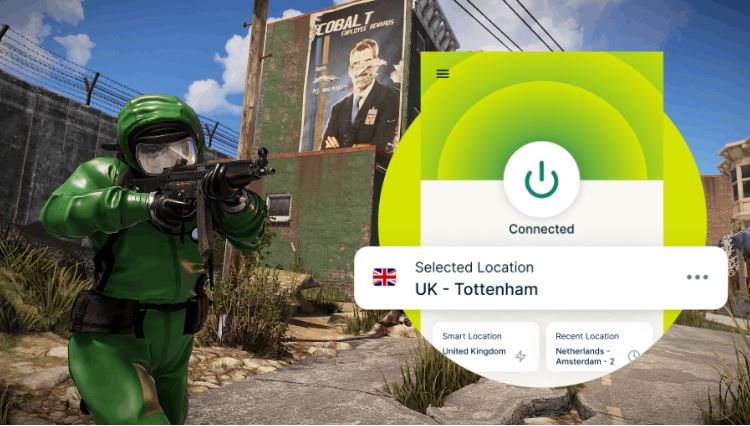
It uses advanced encryption while maintaining high speeds, making it ideal for competitive environments. It supports VPN for Windows, macOS, and routers, and offers strong compatibility across devices. While it doesn’t have a permanent free plan, it provides a 30-day money-back guarantee, and pricing starts at a relatively premium tier compared to competitors.
NordVPN is another strong contender for the best VPN for Rust, especially for users who value both security and performance. It operates 7400+ servers in 118 countries and includes specialized servers for optimized connections.
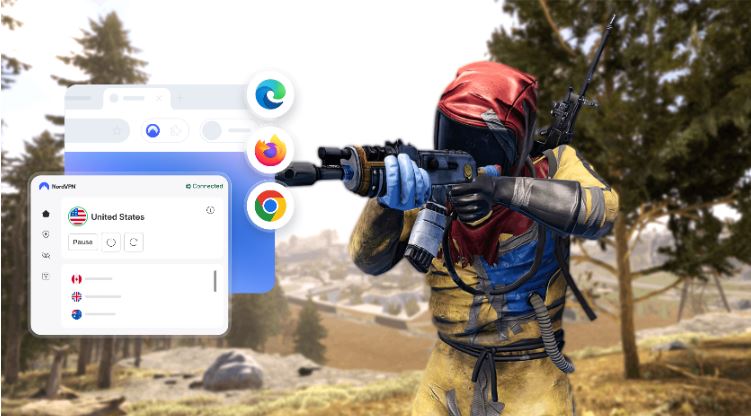
Its features include double encryption, threat protection, and strong privacy policies. NordVPN works across major platforms and provides consistent speeds for gaming. Although it doesn’t offer a fully free version, its pricing plans are competitive, and users can test it risk-free with a refund policy.
If you’re looking for the best free VPN for Rust, iTop VPN stands out as a flexible and user-friendly option. It offers a generous free VPN plan and unlimited use for life. It is accessible for beginners who have no budget or who want to test a Rust VPN without an upfront cost. There are 10+ free servers in low-latency regions, such as the United States or Japan.



What’s better, iTop VPN provides a wide VPN server list, 3200+ servers in 100+ regions for gaming and streaming. It supports Windows, Mac, iOS, and Android, and features a dedicated IP for Windows, ensuring smooth integration with gaming, the main platform for Rust players. Premium upgrades unlock faster speeds, more servers, and features like double VPN, ad-blocker, etc, with affordable entry-level pricing.
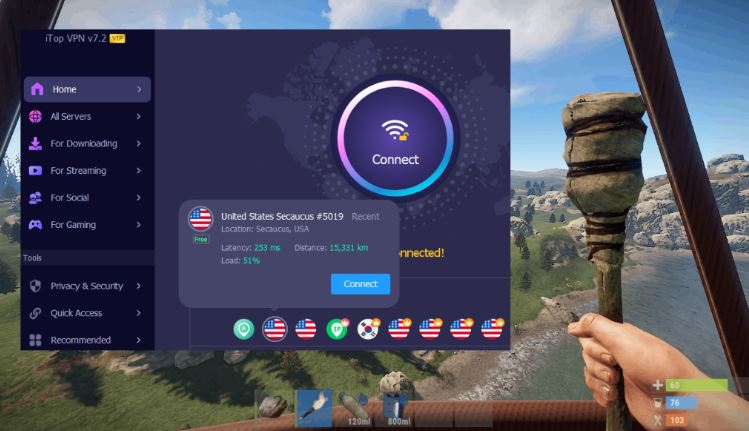
Choosing the best VPN for Rust is only part of the process - you also need to use it correctly.
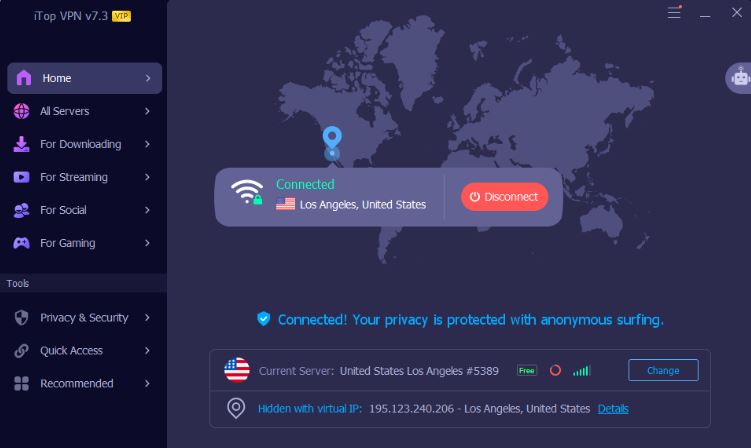
Since Rust is primarily played on PC, especially via Steam, using a Windows-based VPN is the most practical approach. For example, with iTop VPN, setup is simple:
Step 1. Download and install the VPN on your PC.
Step 2. Launch the app and log in, then select a nearby server and connect.
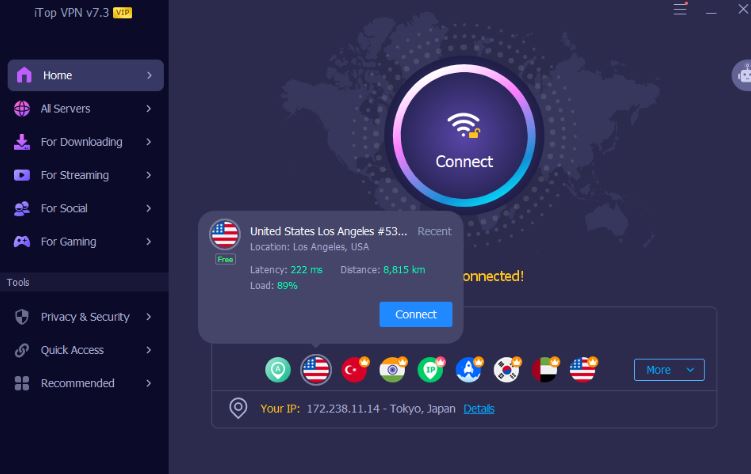
Step 3. When connected, launch Rust and play more smoothly.
1. Can VPN help you avoid bans in Rust?
No. VPNs do not bypass anti-cheat systems and cannot prevent bans.
2. Should you use a Free VPN for Rust?
A reliable free VPN for Rust is fine for testing or short-term use, but premium options offer better speed and stability.
3. Is Rust VPN not allowed?
VPNs are generally allowed, but some servers may block certain IPs.
4. Does VPN reduce lag in Rust?
Yes, it improves routing and avoids network congestion.
5. Can VPN unlock more servers?
Yes, it allows access to different regional servers globally.
The Bottom Line
Using the best VPN for Rust is one of the most effective ways to improve your gameplay experience. While it won’t help with cheating or bypassing rules, it can significantly reduce ping, stabilize connections, and unlock better servers. Whether you choose a premium provider or the best free VPN for Rust, the key is to focus on performance, reliability, and proper usage for the best results.
10+ free servers in US, UK...
3200+ extensive servers
Dedicated IP addresses
Ad blocker and Proxy service
For Windows 11/10/8/7
Subscribe to Our Newsletter
Subscribe to our newsletter to stay updated every moment.

Subscribe to Our Newsletter
Subscribe to our newsletter to stay updated every moment.
© 2026 iTop. All rights reserved.